
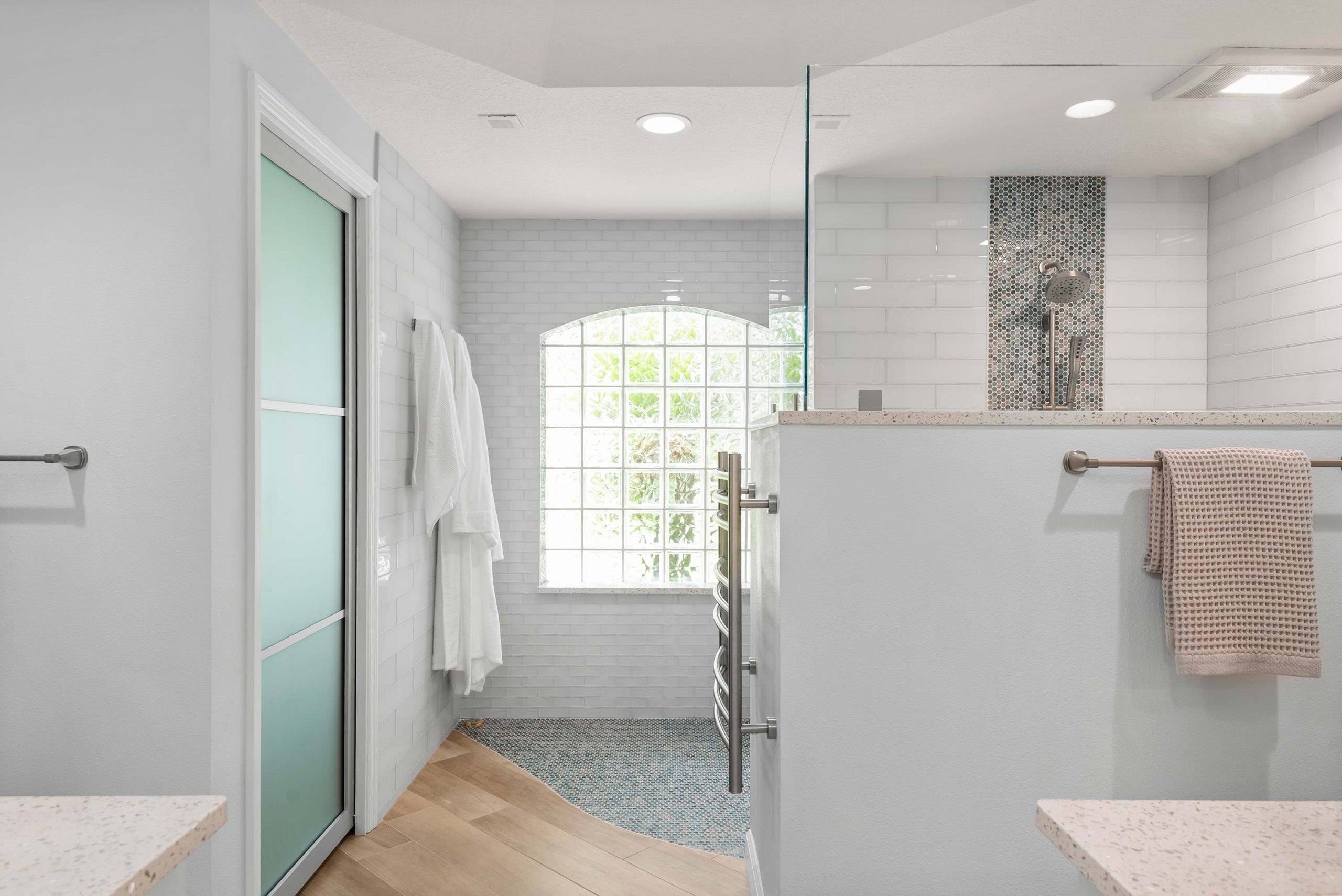
Designing your "forever home" is about more than just aesthetics that will stand the test of time; it is about anticipating how your daily life will evolve over time. Whether you are planning a traditional, mid-level update or investing in a full luxury renovation, creating a space that safely grows with you is so important.
This realization is reshaping the remodeling industry. Over 90% of older adults would prefer to age in their own homes, but only about 10% of U.S. houses are currently "aging ready" with the necessary accessibility features. Planning your home now for how you will live in it later, done proactively before a specific need arises, is the core of true aging-in-place design.
What is the Most Common Aging-In-Place Project?
According to the National Association of Home Builders (NAHB), bathroom remodels remain the #1 request for aging-in-place modifications, followed by kitchens and whole-house renovations. In a 2025 survey, 73% of professional remodelers identified bathroom updates as their most frequent project.
Specifically, the tub-to-shower conversion is the most frequent safety upgrade. This is a critical modification because it addresses the area of the home where the highest percentage of accidents occur.
Let's look at ways to make your bathroom and kitchen work in your forever home..
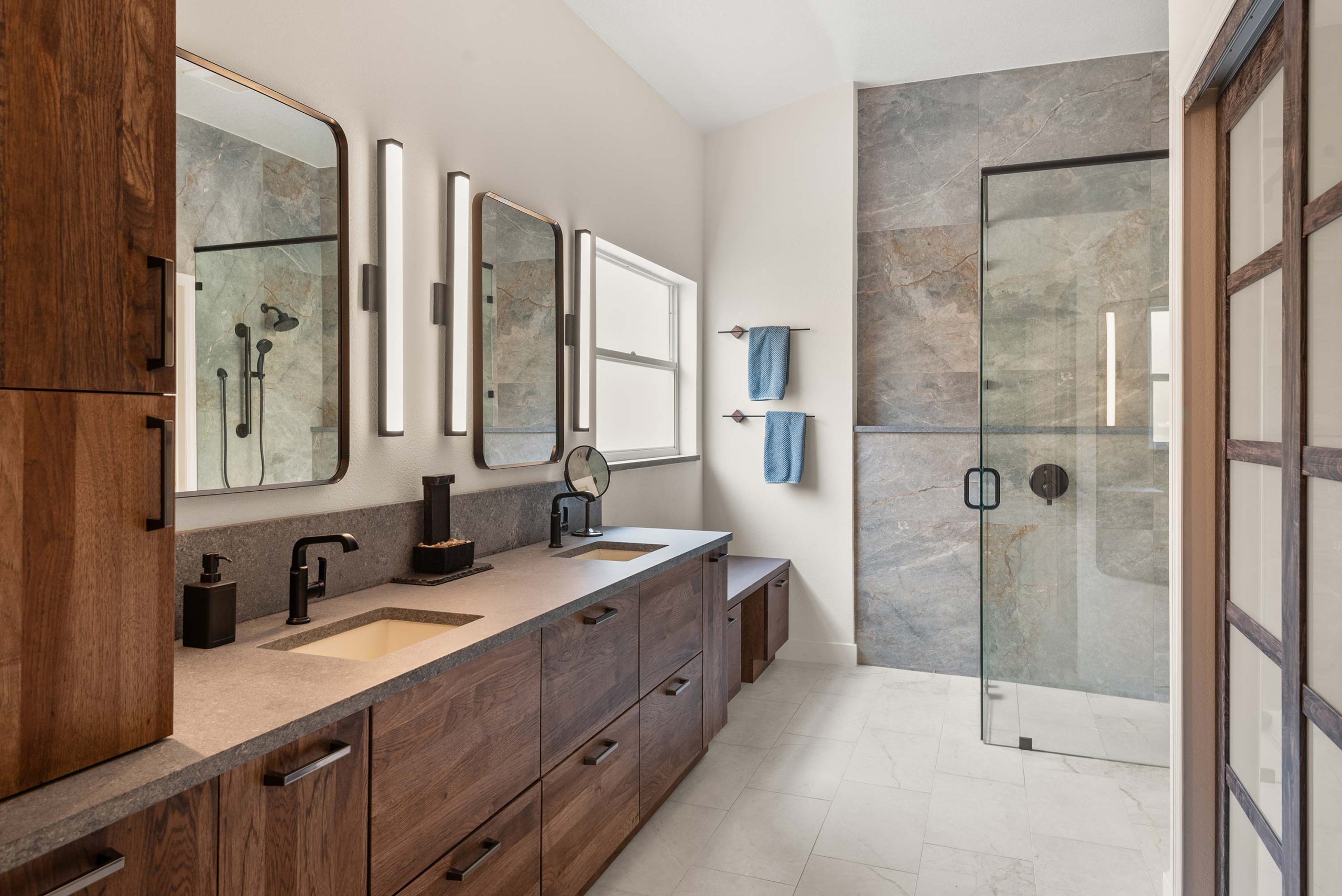
Aging-In-Place for Your Bathrooms
1. Install Non-slip Flooring
One in four older adults reports a fall each year. You can reduce the chances of this happening by having non-slip flooring installed.
Textured, matte finish flooring provides better traction than high-gloss tile without announcing itself as a safety feature. Large-format tiles with fewer grout lines also reduce trip hazards and are easier to clean.
Designer Tip: You do not have to sacrifice aesthetics for safety. Matte porcelain that mimics natural stone or wood grain gives you the look you want and the traction you need for safety and piece of mind.
2. Make the Entrance Bigger
Standard doorways are often too narrow to navigate comfortably with a walker or wheelchair. Plan for doorways that provide at least 36 inches of clear passage, making it easier to accommodate wheelchairs, walkers, and other mobility needs.
Cost Tip: Addressing doorway width while structural walls are open during a remodel costs a fraction of what it costs to do as a standalone project later.
3. Integrate Smart Lighting
Poor visibility is a primary contributor to home accidents. Vision changes with age, and spaces that feel well-lit at 40 can feel dim at 65.
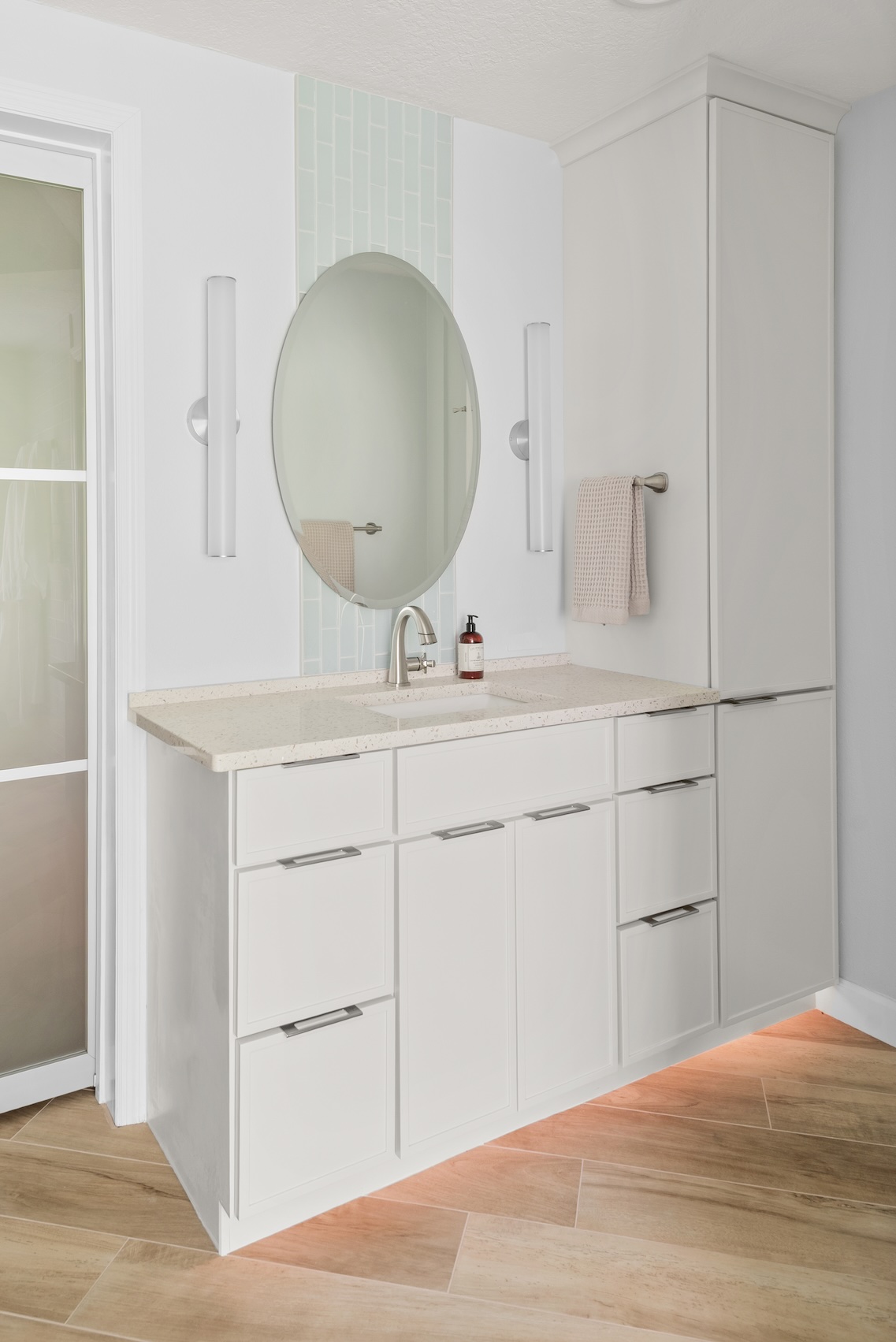
Modern designs now feature Circadian lighting, which mimics natural daylight patterns and motion-activated "path-to-bath" sensors that illuminate low-level pathways at night. Consider adding recessed lighting over the shower, toe-kick lighting under the vanity, and lighted mirrors to create a bathroom that works safely at every hour.
4. Make the Shower More Accessible
For the shower, two good options are making it doorless and curbless. Both work great for individuals with walking aids or wheelchairs. Many homeowners are converting the tub and shower area into a larger shower that can help make it more accessible for aging-in-place.
Designer Tip: Size matters here too. A shower large enough for two people to be in comfortably is worth considering – not just for aesthetics, but for future flexibility if assistance is ever needed.
A curbless shower adds roughly $3,000 to $4,000 to a standard bathroom remodel. If you wait and need it down the road, know that adding a curbless shower will require gutting the bathroom. The concrete under your floor has to be adjusted during construction. If you are remodeling a bathroom, now is the time to do it.
S&W Kitchens Designer, Krista Agapito
5. Install Designer Grab Bars
Safety hardware doesn't have to look clinical, we utilize integrated hardware that functions as a high-end towel rack or soap dish. Today's grab bars come in every finish (brushed gold, matte black, polished nickel) and are designed to match your plumbing fixtures exactly. Most people looking at them would assume they are a towel bar.
The Two of the most common places where people with mobility issues find grab bars very convenient are next to the toilet and in the shower, but depending on how big your bathroom is, other locations might also be useful.
Product Recommendation:
Kohler and Brizo (Delta's designer line) both offer grab bars in all their designer finishes, designed to coordinate with their full plumbing lines. You pick the finish that matches your fixtures and the bar disappears into the design.
Designer Tip:
Blocking in the Walls: Blocking is plywood or framing installed inside the wall behind the drywall, creating a solid surface that supports a person's full body weight on a grab bar.
Adding blocking during a remodel costs a few hundred dollars. Installing grab bars without a block in later means removing tile, cement board, and drywall - a significant demolition project.
Do yourself a favor: Block now. Install grab bars whenever you are ready.
"When we install blocking, we create a drawing showing exactly where it is located in the wall and send it to the client. When you need it years from now, you will know exactly where to put the grab bar"
S&W Kitchens Designer, Chris Druschel
6. Drawers & Pull- Outs in Cabinets
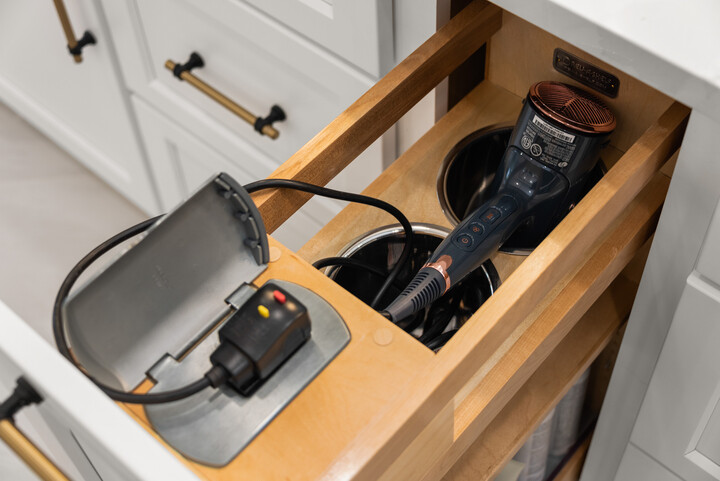
Standard base cabinets require bending and crouching to access the back. Converting them to full-extension drawers and pull-out shelves means everything comes to you. No kneeling, no reaching into the dark, no items lost behind other items.
Counterintuitive Tip:
Soft-close drawers can actually be harder for people with arthritis to open because of the resistance in the mechanism. If arthritis is a concern now or may be in the future, ask your designer about alternatives before specifying soft-close throughout.
Aging-In-Place for your Kitchen
The kitchen is the heart of the home, but it requires a "wellness-focused" design to remain functional for a lifetime. Recent trends emphasize "Invisible Accessibility". Features that support a healthy lifestyle without a clinical appearance. Our clients do not want a home that resembles a hospital and we work hard to ensure our designs are both beautiful and safe!
1. Adjustable Countertops and Rounded Edges
Most countertops are between 32 and 36 inches high. Someone with mobility impairments, specifically a person in a wheelchair, will most likely find this uncomfortably high. You can either have a drop-leaf-type countertop fitted. or get a professional to lower the whole top. At the same time, it’s also a good idea to consider whether the sink should be moved to a more accessible spot.
Additionally, ensure all counters have rounded or eased "waterfall" edges to prevent bruising and accidental injury.
2. Smart Storage and Pull-out Shelves
Some of your kitchen cabinets might have to be lowered to bring them within easy reach of someone in a wheelchair. Cabinet accessibility is a major factor in kitchen safety. Features like pull-down shelving and deep drawers eliminate the need for heavy lifting or reaching into dark, low corners.
3. Ergonomic Appliance Placement
Heavier appliances such as mixing machines and microwave ovens should be kept in one position and at a level where someone in a wheelchair can easily access them. Also, make sure that lightweight appliances are stored in a place where everyone in the house can reach them. Pairing ergonomic placement with dishwashers raised slightly off the floor and refrigerators with bottom freezers ensures your kitchen works significantly better every day.
4. Accessible Outlets and Lighting
Task lighting under cabinets is one of the most useful and least expensive kitchen upgrades available. It illuminates your countertop work surface directly, eliminates shadows, and makes cooking, reading labels, and working in the kitchen significantly easier as vision changes over time.
Designer Tip:
If your kitchen remodel does not include under-cabinet lighting, ask your designer why not. It is one of the easiest things to add during construction and one of the most disruptive to add after the fact.
Is a Aging-In-Place Remodel a Good Investment?
A proactive aging-in-place design plan is a significant long-term investment in your quality of life. While remodeling costs vary based on materials and structural needs, the benefits of staying in a familiar environment are immeasurable.
Choosing to design your "forever home" provides a sense of independence and stability that will give you peace of mind for years to come.
As S&W Kitchens Designer Chris Druschel notes:
"If you are aging -in-place or have decided to make this your forever home, you need a professional designer to help you. There are things you might not know about that the internet or your past experience cannot tell you. You do not want to redo your whole bathroom and not even know that curbless showers were a thing.
You can Google all you want, but it is like WebMD. If something is really wrong, you go to an actual doctor."
Want More Expert Tips on Planning Your Forever Home?
Download our free 12 Essential Aging-in-Place Upgrades Guide to explore ideas for your next project.
Ready to Discuss Your Home’s Unique Needs?
We are here to help you design a space that looks incredible and supports your lifestyle for years to come.
Schedule a forever home consultation with an aging-in-place specialist today or stop by one of our seven showrooms across the Orlando and Tampa Bay area.
Winter Park | Longwood | Windermere | Melbourne | Palm Harbor | Tampa | Sarasota
Related Reading:
- A Bathroom Designed for Aging-in-Place
- Age in Place Without Looking Like It
- A Bright Aging-in-Place Bathroom Built for Retirement Living
- View our Aging-in-Place Portfolio
Resource Links:
- Harvard Joint Center for Housing Studies (LIRA Report 2026): jchs.harvard.edu
- NAHB Remodeling Market Index & Trends (Feb 2026): nahb.org
- CDC Fall Injury Data & Prevention: cdc.gov
- NKBA 2026 Kitchen Design Trends: nkba.org
- ADA Guide to Entrances and Doorways: access-board.gov